The hippopotamus is a large animal that is most often found wallowing in rivers and dams throughout Kruger National Park. They're a common site in most watering holes and are often in herds, but they're also very
easily mistaken for grey rocks!
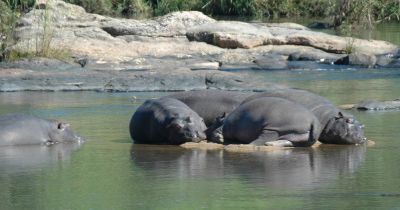
Be sure to double check to make sure you don't miss one when you pass by a waterway!
Their snouts sometimes even look like
crocodile noses when they're just floating beneath the surface of the water.
These large clumsy looking mammals don't actually swim. They walk along the bottom of rivers and dams.
Did you also know that they release a red substance from their skin that's like a sunscreen? Plus their closest living relatives are:
- Dolphins
- Porpoises; and
- Whales
They're also semi-aquatic, spending some of their life in water and some on land.
They leave the water at dusk to graze on grass. They will venture up to 8km (5 miles) from a river to graze! If you go for a sunset or night
game drive in Kruger National Park, you might see one on the side of the road. We saw about 8 on one sunset game drive wandering around the place!
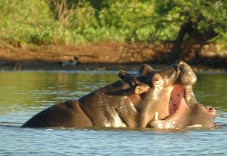
If you stop at a waterhole, a river or even a special viewing hide where these great beasts are about, wait a while and you're sure to see one of them open their massive jaws and expose their humongous lower canine teeth. They do this when they feel threatened.
At some
Kruger National Park rest camps near rivers, such as Lower Sabie, you can hear these great animals laughing in the rivers at night. It's unforgettable!