The fever tree which grows in Kruger National Park is a tall growing type of acacia. It's easy to identify.
It's trunk and branches are pale green. Long white sharp thorns also grow from its branches. Be careful not to scratch yourself on one or even your car if you drive close to one!
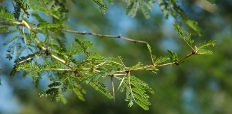
If you're going to Kruger National Park,
look out for birds making their nests in these trees. They like them because the thorns provide extra protection against predators like snakes.
The tree is also a good source of food as it has a diverse variety of edible parts, so
keep an eye out for these animals around them which might be feeding:
Because the tree's trunk is green, it photosynthesises (turns carbon dioxide and water into oxygen) in the bark. It is only one of a few trees that can do this well!
The tree is native to south-eastern Africa and grows:
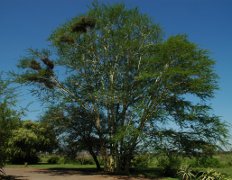 In hollows where there is underground water or where water gathers after rainfall
- In swamps
- Next to lakes
- On riverbanks
It grows quickly, but only lives for a relatively short amount of time.
It gets its name from traditionally growing in the same swampy areas that malaria-carrying mosquitoes lived in. European settlers noticed that people got malaria where these trees grew. They served as a good warning that malaria was around. In fact, they thought the tree caused malaria!